One of the most Humourological moments of the summer involved a parliamentary election, a 90-centimetre ballot paper and a man wearing a silver bin on his head.
Only in Britain could that sentence sound less like satire than a news report.
The Clacton by-election began when Nigel Farage resigned his seat and stood again, presenting the contest as “the people versus the establishment”. The major political parties declined to take part, regarding the whole thing as a political stunt.
Into the vacuum stepped Count Binface.
“Game on, Nige,” he announced.
Count Binface describes himself as a 5,000-year-old intergalactic space warrior from Sigma IX. He also claimed to be the only candidate capable of uniting the country, which is quite an assertion from someone whose face is technically a waste-management facility.
Yet the more the campaign unfolded, the more he seemed to understand something important about British psychology.
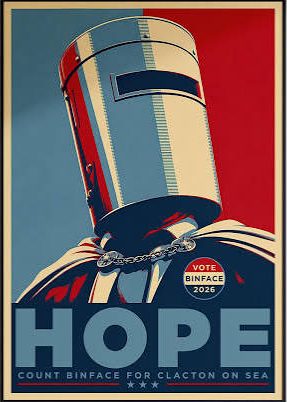
His 20-point manifesto included building at least one affordable house, capping the price of a 99 Flake at 99p and cutting your taxes while raising everybody else’s. He also proposed nationalising Adele and conscripting anyone who uses a speakerphone on public transport.
The last of these may be the first national service policy to command almost universal support.
During one interview, Binface was asked whether he would remove his helmet. Referring to the unmasking of Darth Vader in Return of the Jedi, he replied:
“Nobody wants to know what’s under the recycling. It’s absolutely putrefying.”
Asked what distinguished him from the other candidates, he said:
“I’m the only fresh thing on the menu.”
This is what good comic communication does. The answer is absurd, but the thought underneath it is precise.
Nigel Farage won the election with 22,239 votes. Count Binface came second with 9,455, representing 26.9 per cent of all votes cast.
More than one in four voters chose the man wearing the bin
That is an extraordinary achievement. It is also a reminder that humour can express something serious without becoming solemn. Those voters were not necessarily expecting Count Binface to form a government and immediately place Adele under public ownership. But they were using humour to participate, protest and make themselves heard.
Psychologists often describe humour through incongruity. We laugh when two things that should not fit suddenly collide. Politics asks us to take power seriously. Then a man dressed as an intergalactic receptacle appears and answers questions more directly than many professional politicians.
The gap creates the laugh.
But it also punctures pomposity.
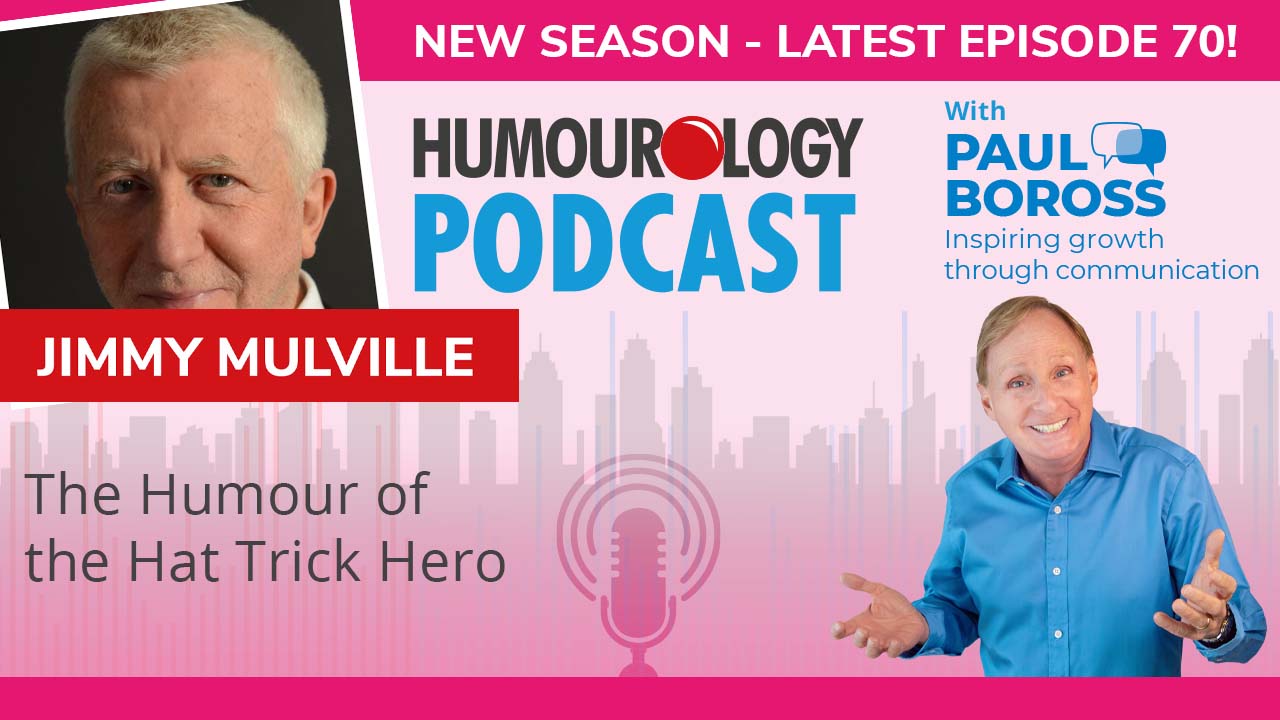
My former Humourology guest Jimmy Mulville, co-founder of Hat Trick Productions and the man behind Have I Got News for You, described the role of satire as bringing powerful people “down to size”.
Not destroying them or humiliating them, but reminding them that status does not place anybody beyond scrutiny or absurdity.
After the result, Count Binface observed that Farage had not appeared at the count and invited everyone to return for “part two of the Clacton by-election, coming soon to a leisure centre near you”.
The candidate wearing the bin stayed to face the result.
There may be a leadership lesson in there somewhere.
Three Humourology Takeaways
- Humour can carry a serious message
A joke can express frustration, expose contradiction and challenge authority without becoming an angry lecture.
Sometimes the silliest voice communicates the clearest point. - Participation does not require perfection
Count Binface gave people an entertaining reason to engage. Leaders do not always have to appear polished, but they must give people a reason to care. - Never become bigger than the joke
Confidence can tolerate laughter. Insecurity tries to control it. The leaders we trust are usually those whose egos can survive a little gentle deflation.
Count Binface did not win the Clacton by-election. But 9,455 votes and second place suggest that he achieved something almost as interesting.
He turned political absurdity into democratic participation and reminded us that whenever British public life becomes too inflated, somebody will eventually arrive to let out the air.
Sometimes with a sharp observation.
And sometimes with the bin still firmly attached to their head.
See you next Tuesday.
Warmest,
Paul x