Recently on the Humourology Podcast, I sat down with one of Britain’s most respected biographers, historians and literary agents, Andrew Lownie.
It turned out to be one of the most fascinating conversations we’ve ever had.

It turned out to be one of the most fascinating conversations we’ve ever had.
Andrew has spent decades studying spies, traitors, royalty, aristocrats and public figures.
He has written acclaimed books on everyone from the Cambridge spy Guy Burgess to Lord Mountbatten, Edward VIII and Wallis Simpson. Most recently, he turned his attention to (the artist formerly known as Prince) Andrew Mountbatten Windsor and Sarah Ferguson in his Sunday Times bestselling book, Entitled: The Rise and Fall of the House of York.
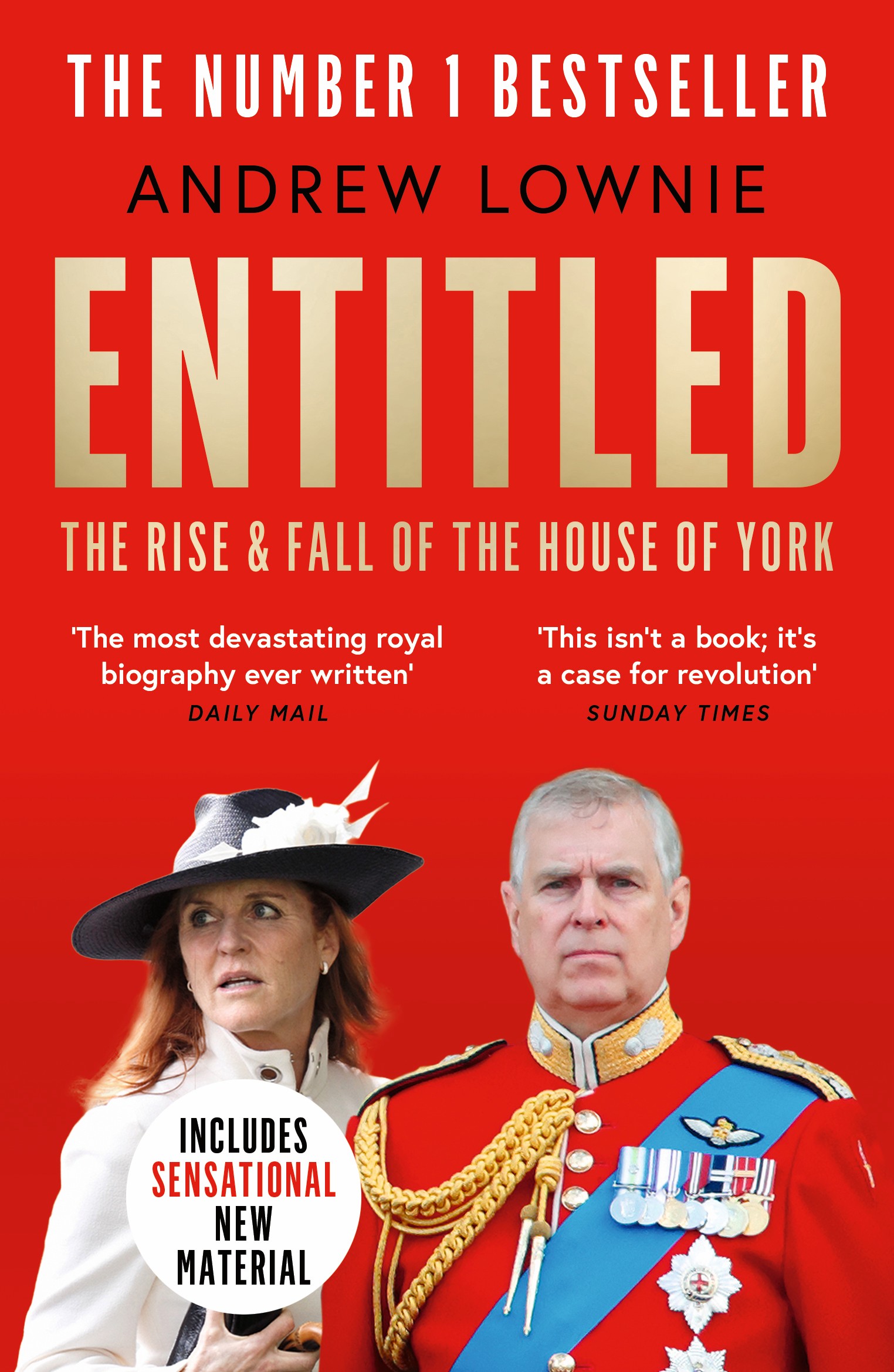
And what a title that is.
Because while the book is ostensibly about royalty, it is really about something much bigger.
The Psychology of Entitlement
Entitlement is the belief that the rules apply to other people. The belief that status can somehow replace self-awareness. The belief that consequences are for somebody else.
As Andrew and I explored during our conversation, these themes are not confined to palaces. They can be found in boardrooms, businesses and organisations of every kind.
Which is one reason I found the book so compelling.
What makes Andrew’s work different is that he is not really writing about events. He is writing about people. More specifically, he is writing about the gap between the image people present to the world and the reality underneath.
The Gap Between Image and Reality
The polished public version versus the complicated human being.
The curated legend versus the truth.
That applies equally to spies, politicians, chief executives and members of the Royal Family.
At one point in the conversation, we found ourselves discussing the strange relationship between power and humour. Why can some people laugh at themselves while others cannot? Why do some people use humour to connect, while others use it to dominate? Why do practical jokes sometimes reveal more about a person’s psychology than a serious interview ever could?
These are exactly the kinds of questions Humourology loves.
Andrew’s books are packed with extraordinary stories, but what fascinated me most was the psychology underneath. The need for approval. The lure of status. The blind spots that power can create. The way people gradually come to believe their own mythology.
And, occasionally, the role humour plays in revealing who they really are.
When Fergie Stole the Show
One of my favourite moments came when I surprised Andrew with a story from my own past.
My great friend Ainsley Harriott and I used to perform together as The Calypso Twins . We regularly appeared at comedy clubs such as the Comedy Store and Jongleurs in Battersea.
We used to finish our act by bringing an audience member on stage to join us for a song called Do You Want To Boogaloo?
Over the years there must have been hundreds.
But one of the most memorable was Sarah Ferguson, who lived on the same street as the Jongleurs club.
Long before camera phones existed, Fergie joined us on stage and threw herself into the performance with complete abandon. Singing, dancing, laughing and generally causing cringe-worthy chaos.
Andrew loved the story.
More importantly, it opened up a fascinating discussion about whether humour, playfulness and mischief were among the qualities that first brought Andrew and Sarah together.
What Biography Teaches Us About Human Nature
From there, the conversation moved through spies, scandals, status, Epstein, power, self-awareness and the peculiar ways human beings justify their own behaviour.
In many ways, the interview became less about royalty and more about human nature.
Which is exactly why Andrew’s books are so successful.
The best biographies are never really about their subjects. They are about us. Our ambitions, our insecurities and our blind spots. They are about the stories we tell other people and, perhaps more importantly, the stories we tell ourselves.
If you enjoy fascinating characters, extraordinary stories and the psychology behind power and privilege, I think you’re going to love this episode.
And if you have not yet read Entitled, I thoroughly recommend it.
Just be warned.
Every few pages, you may find yourself muttering the same thing I did:
“Surely that can’t be true…”
Then, turning the page and discovering that somehow it is.
See you next Tuesday.
Warmest,
Paul x
Here’s a handy link to our previous episode on Season 8 of The Humourology Podcast